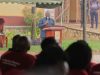

This yesterday 28th October 2026, the Minister of Local Government, Hon. Balaam Barugahara, came to Rukungiri with a clear message that public money belongs to the people. Every shilling lost to a fake contractor or an inflated bill is a shilling stolen from a health centre, a school or a village road.

But the visit also left pain behind. Some of our public servants have been interdicted, and their families, workmates and neighbours are hurting. Many are quietly asking: is this fair? That question deserves an honest answer.
A pause, not a punishment
Many people misunderstand interdiction. It is not dismissal, and it does not mean the person is guilty. Under the Uganda Public Service Standing Orders (2021), it means an officer steps aside for a short time so that an investigation can go on without interference. The officer is still a public servant. If the investigation clears them, they go back to work with their good name restored.

In fact, interdiction protects two groups. It protects the public, because files and witnesses stay safe while the facts are collected. And it protects the honest officer, who is better off with a clear, independent finding than with years of rumors.
There is also an old legal idea behind it. A public servant works on behalf of the citizens, just as a manager runs a business on behalf of its owner. The citizens are the owners and the officer looks after their money and authority in trust. When that trust is in doubt, fairness has always allowed the owner to pause the manager’s work until the accounts are checked. Interdiction is simply that idea today: a fair tool that protects the people who own the public purse.
When we follow the words of the law but forget its purpose
For almost forty years, the NRM government has built strong institutions to fight corruption: the Inspectorate of Government (IGG), the Auditor General, the Anti-Corruption Court, the Leadership Code and the PPDA, which watches over government buying. On paper, few countries are better prepared.
Yet, as the President himself has said many times, corruption is still one of the biggest threats to our country’s progress. Why?
One reason is that we have often treated procedure as the goal instead of the path. Files move slowly. Every small detail in the rules becomes a hiding place. When the law is read only word by word, without asking what it was meant to achieve, clever people escape on technicalities while ordinary citizens keep waiting for a health centre that never opens. When it takes ten years to hold someone accountable, that is no longer accountability.
The law was written to protect the people. If we only follow its words and forget its purpose, it can end up protecting the very people who harm them.
The PLU way: the purpose comes before the paperwork
The Patriotic League of Uganda was born from frustration with this gap between the law on paper and justice on the ground. Its approach is simple: go to the field, look at the project, listen to the community, and act while the evidence is still fresh. That is why ministers now visit projects in person, instead of relying only on long chains of reports that often hide the truth.
But PLU is not only about catching thieves. It is about bringing back our national values: love for our country, honesty, hard work and service. A public office is not a reward to enjoy; it is a duty to perform. A young engineer in Rukungiri should know that honest work will be respected, and dishonest work will be caught.
This means reading our laws by their purpose. We should ask not only “What does the rule say?” but also “What was the rule meant to protect?” Every time, the answer is the ordinary citizen.
Quick, but always within the law.
A new approach must not create new injustice. Speed without fairness only swaps one wrong for another, and it gives the corrupt a sympathy they do not deserve. Article 28 of our Constitution promises every person a fair hearing and says everyone is innocent until proven guilty. These rights do not block the fight against corruption; they make its victories last.
This is why the Minister’s directives in Rukungiri were measured and grounded in law. PLU knows where its authority ends. That is exactly why the action taken was interdiction, not dismissal: a lawful, temporary step that leaves the final word to the investigators, the disciplinary bodies and, where necessary, the courts. Those who attended the rally saw this for themselves. The Minister came with a lawyer from the State House Anti-Corruption Unit, and I had the opportunity to interact closely with them. Their presence was a clear sign that every step was being checked against the law, not only against public anger.
Accountability with justice
Rukungiri does not have to choose between a government that acts and a government that is fair. We can, and must, ask for both. To Hon. Barugahara, we say thank you for bringing this fight to our doorstep. To our interdicted officers and their families, we say: this is a pause, not a judgement, and we will insist that your cases are heard fairly and finished quickly. To every citizen, we say: public money is your money, and protecting it is a duty we all share.
Forty years have taught us that good laws alone do not clean a nation. Good laws, used with purpose, courage and fairness, can.
“Nitubaasa”and together, we can.
Dr. Dickson Niwasasira is a resident of Rukungiri, a medical doctor, a policy and governance commentator, and a PLU mobiliser.