The story of burying the pen and the book at Lomukura in Karamoja remains one of the most symbolic narratives in the region’s educational history and it reflects a deep-rooted tension between the promise of formal education and the painful experiences associated with colonial administration.
At the time, the elders of Karamoja were divided with one group supported the introduction of formal education for their children, while another strongly opposed it.
![[PROOF] Kabale Policeman Wins 180M UGX with Fixed Games](https://www.informer.co.ug/wp-content/uploads/2024/04/wins-millions-from-sports-betting-300x133.jpg)
Those opposed associated the pen and the book with colonial exploitation as they accused colonial authorities and their local agents of using the pen to conscript their children into foreign wars from which many never returned, while the same instrument was used by tax collectors to impose harsh and burdensome taxes on the local population.
As a result, the more radical elders resolved to bury the pen and the book at Lomukura in Kotido Municipality, treating them as symbols of oppression and collective suffering. Although a small number of families secretly sent their children to schools in Moroto District and Ngora in the neighboring Teso sub-region, the overwhelming majority of elders rejected formal education.
Nearly six decades later, a significant turning point has emerged and precisely on 5th November 2003, the First Lady of Uganda, now Minister for Education and Sports, Hon Janet Kataaha Museveni, presided over a historic ceremony at Lomukura during which the elders formally unearthed the pen and the book and this act symbolically reopened the path for education to take root in Karamoja.
A monument was erected to commemorate this milestone, marking a new era in the region’s transformation journey and around this site, the local community established a makeshift community school where children gather after returning from herding cattle to acquire basic literacy and numeracy skills.
However, despite operating for several years and enrolling significant numbers of learners, this school remains unrecognized by government authorities and it lacks basic infrastructure, including classrooms and sanitation facilities, highlighting the persistent gap between community initiative and state support.
The mere existence and sustained attendance of this community school is a clear testament to the profound shift in attitudes toward education among the Karimojong, as it demonstrates that the community is now ready to fully embrace education as a pathway to development.
Nevertheless, education in Karamoja continues to face severe structural challenges and the Sub-region records the lowest literacy rate in Uganda, at 30.4%, compared to the national average of 76.1%. School dropout rates remain high, compounded by poor infrastructure, chronic hunger, child labor in mining activities, and deeply entrenched cultural preferences for pastoralism.
Although cattle rustling has historically exacerbated insecurity, the Resident District Commissioner of Kotido, Mr Charles Ochogor, has confirmed that the area is now largely peaceful and poised for development.
Available research further indicates that more than 50% of children aged between 6 and 24 in Karamoja have never attended school, while approximately 86% of the youth population lacks any formal education.
Youth unemployment exceeds 40%, affecting the most productive age group, which constitutes nearly 60% of the region’s population and this situation has fueled cycles of violence and social instability. Poverty levels in Karamoja remain the highest nationally, standing at 74.2%.
Equally concerning is the large proportion of extremely idle youth, estimated at between 60% and 68%, who are neither employed, enrolled in education, nor engaged in formal training or skills development and this represents a significant loss of human potential and a critical development challenge.
In light of these realities, only a holistic and transformative intervention can adequately address Karamoja’s development deficit.
According to Dr Robert Limlim, Head of the Karamoja Professionals Association, the sub-region suffers from long-standing underdevelopment driven by limited access to skills, knowledge, and institutional capacity and he argues that Karamoja urgently requires a comprehensive and sustainable solution.
It is within this context that the establishment of the Karamoja Peace and Technology University (KAPATU) must be understood.
The official unveiling of the KAPATU project on 23 November 2025 at Losilang, Kotido Municipality, by His Excellency the President of Uganda who was represented by the former Prime Minister Rt Hon Amama Mbabazi, marked a decisive response to these challenges and KAPATU is envisioned as a transformative institution capable of addressing the structural roots of Karamoja’s underdevelopment.
KAPATU is a tripartite initiative involving the Catholic Lawyers’ Society International (CLASI), chaired by Counsel Twinobusingye Severino, who also serves as Chairperson of the KAPATU Council, the Kotido Catholic Diocese, led by Rt Rev Dominic Eibu MCCJ, who is also the KAPATU President and the Government of Uganda.
The idea for KAPATU was conceived in 2014 following extensive research conducted by the Catholic Lawyers’ Society International, which revealed a significant socio-economic and educational gap between Karamoja and the rest of the country, necessitating a holistic institutional response.
In April 2023, the concept was formally operationalized when His Excellency the President, represented by Her Excellency the Vice President, Maj Jessica Alupo, officially launched the project at the Uganda Episcopal Conference headquarters in Nsambya and this was followed by a groundbreaking ceremony at Losilang in July 2023, paving the way for the project’s formal unveiling in November 2025.
The local community regards KAPATU as a strategic anchor institution capable of driving socio-economic transformation, fostering peace, and promoting regional stability. Notably, on 16th December 2025, the National Council for Higher Education (NCHE) conducted an inspection visit to KAPATU’s main campus at Losilang to assess its readiness to commence academic operations.
The process toward the grant of a provisional license is currently underway, representing a major milestone in the realization of Karamoja’s educational and developmental aspirations.
Through KAPATU, Karamoja stands on the threshold of a new chapter—one defined not by marginalization, but by opportunity, skills development, peace, and sustainable transformation through education.
The writer is the Chairperson Council-KAPATU.
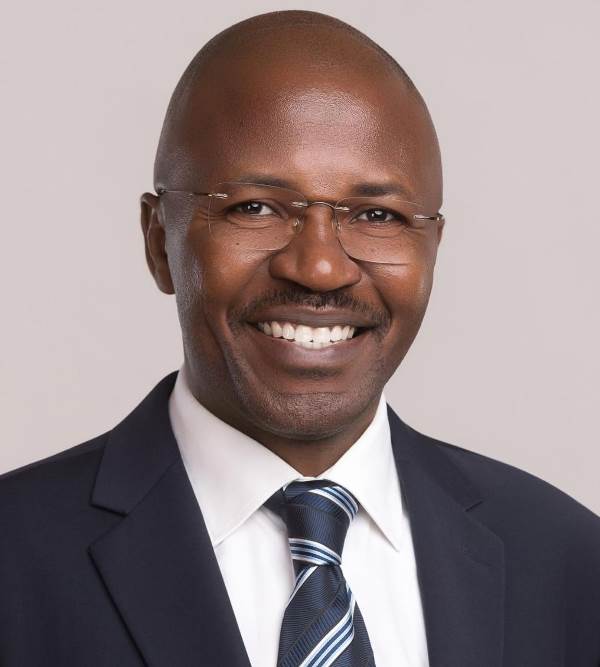
By Counsel Twinobusingye Severino