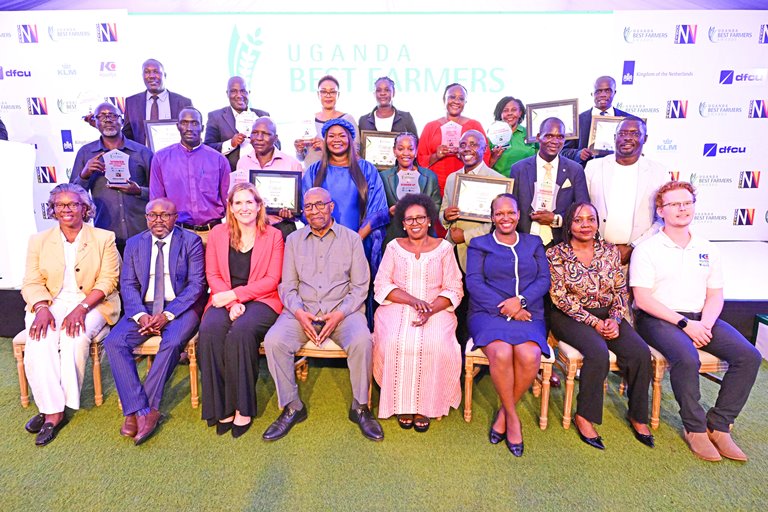
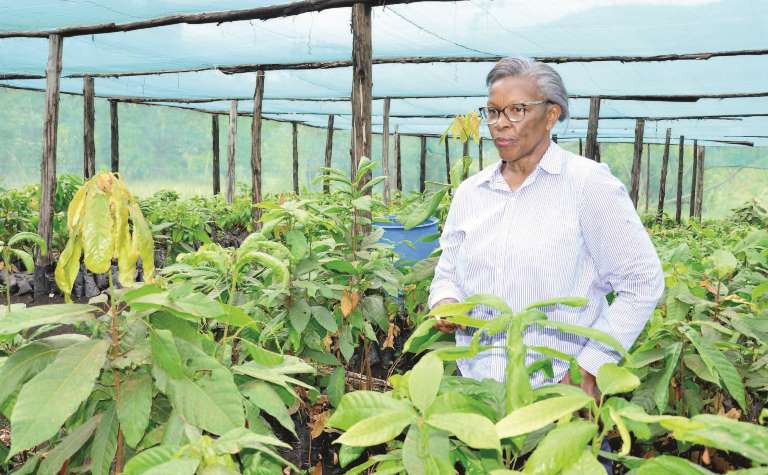
As one of the winners of the 2025 Best Farmers Awards, Joan Kantu is part of a growing class of Ugandan agripreneurs demonstrating that agriculture can be both profitable and transformative. Through the programme, dfcu Bank and its partners have combined recognition with practical support, including financing opportunities, mentorship and an exposure visit to the Netherlands.
![It Works! How Single Mom Makes 3 Millions Weekly From Sports Betting [PROOF]](https://www.informer.co.ug/wp-content/uploads/2024/04/Single-mum-300x204.webp)
Kantu, who leads a 65-acre cocoa enterprise, says the experience strengthened her ambition to move beyond primary production and build a fully integrated chocolate business. In this interview, she reflects on her farming journey, the role of finance in scaling her enterprise, and the lessons from the Netherlands that continue to shape her vision for Uganda’s agricultural sector.
Q: What led you into commercial agriculture?
Joan Kantu:
My focus on agriculture began during the COVID-19 lockdown. The uncertainty of that period made me rethink the importance of land, food production and long-term sustainability. I undertook specialised training in cocoa farming and committed fully to building what has since grown into a 65-acre cocoa enterprise.
![Jinja Policeman Reveals How He Won 280M From Fixed Matches [PROOF]](https://www.informer.co.ug/wp-content/uploads/2024/04/wins-millions-from-sports-betting-300x133.jpg)
Q: What contributed to your recognition as a Best Farmers Awards winner?
Joan Kantu:
Our approach centres on sustainability and value addition. We operate an organic farming model, have planted more than 100,000 teak trees, and are investing in processing cocoa into premium chocolate products. The focus has always been on creating long-term value from the land while preserving it for future generations.
Q: What did winning the award mean for you and your business?
Joan Kantu:
The recognition validated years of hard work and reinforced the potential of commercial agriculture as a serious business. It also gave me access to the Netherlands exposure programme, which broadened my perspective and introduced me to international standards in processing and agribusiness management.
Q: How has access to finance supported your growth?
Joan Kantu:
Access to financing and institutional support enabled us to scale confidently from 15 acres to 65 acres of cocoa. It allowed us to invest in infrastructure, strengthen our production systems and build a more resilient farming operation.
Q: What financing challenges do farmers still face in Uganda?
Joan Kantu:
Agriculture is often viewed as high risk, which can limit access to credit. Farmers need more than financing; they need technical support, specialised expertise and investments in sector-specific infrastructure. Financial institutions can play a critical role in helping farmers manage risk and grow sustainably.
Q: What were your key takeaways from the Netherlands exposure visit?
Joan Kantu:
The biggest lesson was the importance of automation, value addition and systems. I saw how successful agribusinesses use technology, strong quality controls and efficient processing to compete globally. It reinforced my belief that Uganda must move beyond exporting raw commodities and invest more heavily in processing.
Q: How are you applying those lessons at home?
Joan Kantu:
The experience strengthened our plans for chocolate production and highlighted the importance of building sustainable family enterprises. We are introducing more structured systems into the business and positioning ourselves for higher-value markets.
Q: What opportunities excite you most about Uganda’s agricultural future?
Joan Kantu:
I am encouraged by the growing shift in mindset. More people are beginning to see agriculture as a business opportunity rather than a subsistence activity. With greater professionalism, stronger model farms and better technical support, Uganda can significantly increase its competitiveness.
Q: What legacy do you hope to build?Joan Kantu:
My goal is to create a sustainable agribusiness that outlives me. I want to combine agriculture, value addition and tourism, while helping develop a new generation of cocoa specialists and agribusiness professionals who can drive the sector forward.