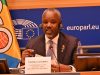

The Speaker Rt Hon Jacob Marksons Oboth has invited researchers to petition Parliament with evidence of where Uganda’s research fails to translate into policy, funding and implementation and pledged parliamentary action to address the gaps.
Speaker Oboth said that Uganda does not lack policies, expertise or research institutions and said that what is lacking is the connection between research, policy, resource allocation and implementation.

The Speaker of Parliament made the remarks while speaking at AgriFoSe2030 Uganda Hub dialogue at Kyambogo University as a “Science Meets Parliament” under the theme “Strengthening the Interface between Science, Policy and Practice for Sustainable Agricultural Transformation in Uganda”.
Speaker Oboth pledged to work through Parliament’s Agriculture and Science, Technology and Innovation committees, using legislation, oversight, budgeting and representation to address the bottlenecks researchers identify.
He said that the test now is which evidence reaches the committees, what action follows and whether it improves services and livelihoods. His statement gave no timetable.
The Speaker urged scientists to transition from passive “think tanks” to active “action tanks” by turning academic data into actionable budget and legislative proposals.

While speaking at the same event, Kyambogo Vice Chancellor Prof Elly Katunguka proposed a parliamentary science-policy platform and a Center of Excellence for Science Translation, noting public universities’ push toward community impact.
According to the Programme Director Prof Elisabeth Rajala the programme marked a decade of the Sida-funded initiative, coordinated by the Swedish University of Agricultural Sciences and endorsed the proposed translation center.
_About the AgriFoSe2030 Uganda Hub_
The AfriFose 2030 Hub is co-managed by Kyambogo University and Gulu University under Dr Judith Irene Nagasha, and the hub trains researchers in policy translation and drives grassroots efforts like the Resilient Urban Food Systems (RUFS) project