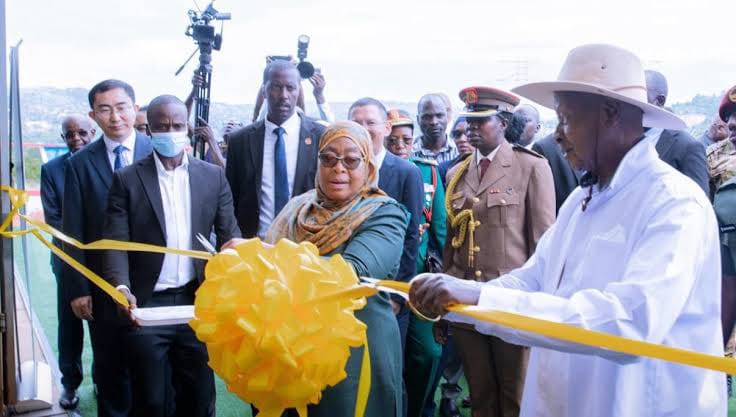
President Yoweri Kaguta Museveni has called for local steel use in automotive manufacturing as he launches US 30 million dollar Truck Assembly Plant – Double Q in Mpigi District
President Museveni guided on the stronger linkages between Uganda’s automotive assembly industry and local steel production to increase domestic value addition and reduce reliance on imported vehicle components.

While speaking during the launch of the US 30 million dollar Double Q Automotive Assembly Plant at Nakirebe in Mpigi District, President Museveni welcomed the investors’ commitment to progressively incorporate locally manufactured steel into vehicle parts.
He noted that the factory’s existing vehicle body-building operations already contribute approximately 20 percent in local value addition and said that the development of Uganda’s steel industry would create opportunities for manufacturers to source raw materials locally, deepen industrialisation and retain more value within the economy.
President Museveni, who launched the facility alongside Tanzanian President Samia Suluhu Hassan, commended the investors for establishing the plant on 45 acres of independently acquired land, with an annual assembly capacity of 4,000 trucks.

This development will create employment for more than 1,200 skilled Ugandans with the lowest-paid worker reportedly earning approximately Ugx 800,000 monthly.
The factory also provides technical training in vehicle assembly, welding, fabrication and electrical installation, while its expansion plans include establishing mini-assembly plants in Tanzania and venturing into tyre manufacturing at Kayunga Industrial Park to which President Museveni said Uganda and Tanzania must strengthen commercial cooperation and emphasising that prosperity is driven by business and investment.
Tanzanian President Samia Suluhu Hassan commended Uganda’s industrialisation drive citing Double Q Motors and Kiira Motors as evidence of the country’s growing domestic manufacturing capacity.
She also applauded Double Q Motors for investing in Uganda, noting that the company’s expansion into vehicle assembly would help reduce dependence on imported second-hand vehicles while promoting regional trade.
She describes East Africa as an attractive investment destination, backed by a growing market, expanding population and youthful workforce.
President Samia urged the East African Community member states to accelerate the transition from agriculture-based to industrial economies with modernised agriculture to support manufacturing describing industrialisation is key to job creation, value addition, technology transfer, export growth and shared economic growth
President Museveni called for African countries to pool their natural resources and strengthen regional economic integration to accelerate industrialisation and prosperity.
He cited Uganda’s iron ore deposits and Tanzania’s natural gas resources and said that if the two are combined, such complementary assets would create opportunities for joint investments and expanded manufacturing.
President Museveni said Africa must move beyond fragmented markets and embrace a larger consumer market to support locally manufactured products, boost trade and improve business competitiveness.
He welcomed Tanzania’s President Suluhu Hassan and expressed commitment to reviving the East African Community emphasising that Africa needs a united market to achieve greater economic prosperity.
President Museveni urged investors to take advantage of Africa’s growing population by investing in productive projects describing the continent as the business centre of the future.
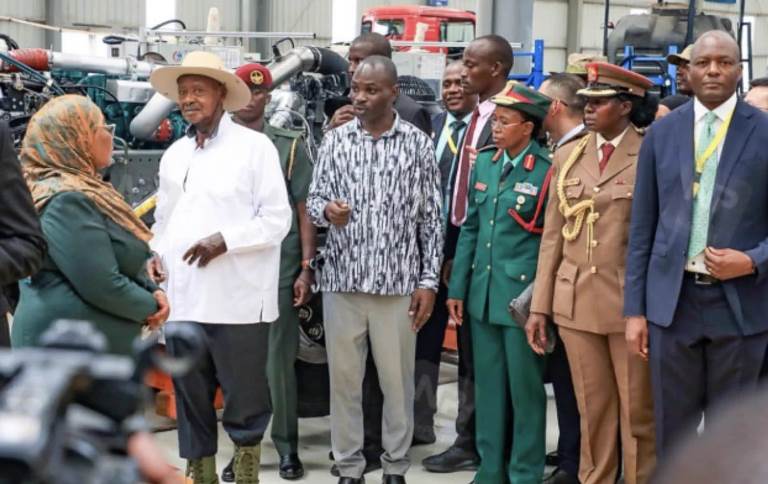
The President pointed out that Africa’s population, currently estimated at 1.5 billion, is projected to reach 2.5 billion in the next 30 years, creating enormous opportunities for businesses, manufacturers and industrial projects.
The President said that the projected population growth presents a huge market for goods and services, making Africa an attractive investment destination.
President Museveni challenged African journalists to prioritise reporting on economic transformation, regional integration and wealth creation, warning that failure to focus on these critical issues could expose Africa to historical mistakes that led to slave trade and colonialism.
He said Africa’s development depends on four key pillars: harnessing natural resources, producing goods and services, establishing a united market and strengthening communication and transport networks to facilitate trade.
He urged journalists to educate the public about these priorities rather than concentrate on issues of less importance to the continent’s future.
President Museveni has commended Double Q and its Chinese partner, Sinotruk, for investing in Uganda’s manufacturing sector saying their activities were aligned with Africa’s economic transformation agenda and has pledged government support for the investors and thanked the Chinese government for its continued partnership with Uganda.
Tanzanian President Samia Suluhu called for harmonised industrialisation policies among East African countries to promote regional value chains and avoid unnecessary competition in manufacturing.
President Suluhu Hassan said that countries in the East African region should complement one another’s industrial efforts and focus on competing with the global market rather than against each other citing the presence of Sinotruk vehicle assembly plants in both Uganda and Tanzania as an example of regional cooperation.
She revealed that Tanzania is exploring partnerships to establish a railway locomotive manufacturing plant as part of its efforts to strengthen local manufacturing capacity.
She also welcomed plans to introduce harmonised regulations governing vehicle assembly and manufacturing in East Africa saying these would support regional value chains and stimulate industrial growth across different sectors of the economy.
Tanzanian President Suluhu Hassan Identifies regional market and rising cargo volumes as growth opportunity for East Africa’s Automative Industry and noted that the growing East African market and rising cargo volumes at the Dar es Salaam Port present new opportunities for vehicle assembly and investment in the region’s transport and logistics sector.
She said that this presents a lucrative market for locally assembled vehicles, noting that increased cargo volumes will require expanded transportation capacity to support regional trade.
She revealed that cargo handled at the Dar es Salaam Port had risen to 33 million tonnes in 2026, increasing the need for more transport and logistics infrastructure across East Africa, hence congratulated Uganda and Double Q Motors on the investment and reaffirmed the longstanding friendship and cooperation between Uganda and Tanzania signified in her two days visit to Uganda
The Minister of Works and Transport Hon Fred Byamukama highlighted job opportunities and tyre manufacturing plans at Double Q Motors Plant as he commended them for creating employment opportunities for more than 1,000 Ugandans, particularly young people, through its vehicle assembly operations at Nakirembe in Mpigi District.
While speaking during the commissioning of the US 30 million dollar plant, Minister Byamukama noted that the company had invested in a 45-acre piece of land acquired independently and employed a substantive number of young people with descent pay
Minister Byamukama also revealed that the government is engaging the company to expand from vehicle assembly into manufacturing with plans to establish a tyre manufacturing facility at Kayunga Industrial Park adding that the development would mark a significant step towards building Uganda’s local automotive manufacturing capacity.
Double Q’s Managing Director Lin Yu said that the Automotive is committed to deepen Uganda’s industrialisation through increased local vehicle assembly, skills development and eventual production of automotive components using locally sourced raw materials including iron ore.
Lin Yu said that the Nakirebe-based assembly plant is intended to support Uganda’s Buy Uganda, Build Uganda policy by reducing reliance on imported finished vehicles saving foreign exchange and creating employment opportunities.
He pointed out that the company currently employs more than 1,200 Ugandans directly and is investing in technology transfer and practical skills training to develop local automotive technicians, engineers and other professionals through training partnerships with Ugandan Universities and institutes to bridge the gap between classroom learning and industrial skills requirements.
Lin Yu said that the company’s long-term ambition is to leverage Uganda’s iron ore resources to support local steel production and eventually manufacture vehicle components, retaining more industrial value, jobs and incomes within the country.
Sinotruk Group General Manager Song Yang da committed to creating more than 3,000 jobs and training at least 1,500 Ugandans over the next three years through its partnership with Double Q Motors as the Chinese commercial vehicle manufacturer moves to strengthen Uganda’s automotive industry.
The Sinotruk General Manager Song said the partnership would expand local vehicle assembly, introduce more product lines and develop local suppliers in support of the Buy Uganda, Build Uganda agenda.
Song Yang also noted that Sinotruk was also strengthening the automotive business ecosystem through investments in spare parts distribution, after-sales services, vehicle financing, insurance and fleet management.
He revealed that the company and its partners had established more than twenty spare parts centres and service stations along major cross-border transport corridors in East Africa to improve vehicle maintenance and reduce operating costs.
The Chinese Ambassador to Uganda Wu Guangrong identified stronger local industrial linkages, employment and skills development for young people and improved access to regional markets as key benefits of Uganda’s growing automotive industry.
Ambassador Wu said that China remains committed to sharing its development experience and manufacturing expertise with Uganda to strengthen local production capacity and support self-sustaining economic growth.
He also urged Chinese investors to respect Uganda’s laws, prioritise workplace safety, protect the environment and invest in developing local talent while supporting surrounding communities and the Chinese Embassy would continue encouraging responsible Chinese businesses to invest in Uganda.
Ambassador Wu hope that the Double Q Motors plant would produce quality vehicles, create skilled jobs and strengthen business partnerships across Uganda, China and the wider East African region.