
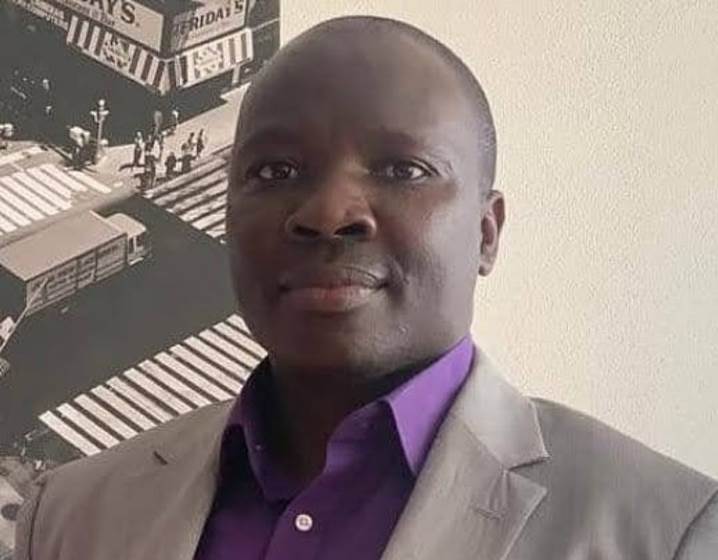
Corruption has been and is still a talk of the day in Uganda, Our reporter caught up with Prince Emmanuel Musanje to discuss Uganda’s path forward—particularly his views on reform, good governance, and eradicating corruption.
In this exclusive conversation, Musanje explains the practical steps he believes the country must take to restore public trust, improve accountability in leadership, and strengthen systems that reduce opportunities for wrongdoing.

Interviewer: To begin, why do you believe Uganda is struggling to develop quickly?
Prince Musanje Emmanuel: If we don’t fight corruption vehemently, we will not rapidly develop our country, Uganda. The substance of our democratic system’s foundation is corruption, and the nucleus of NRM government. We must repudiate this “putrid” administration and move toward a new approach.
Interviewer: What is your core message for reform?
Prince Musanje Emmanuel: We need a new system and a new administration—along with a strong justice system—to tame corrupt officials. Their characters are abysmal, and this includes all civil servants. Under the current regime, the situation hasn’t just stalled—it has failed.
![[PROOF] Gov’t Officer Reveals How He Won 350M Last Night From Fixed Matches](https://www.informer.co.ug/wp-content/uploads/2026/01/Government-Officer-Wins-Big-with-Fixed-Matches-300x133.jpg)
Interviewer: What kind of structural changes are you calling for?
Prince Musanje Emmanuel: Upon taking office, we actually need structural change to build modern strong state institutions, and also strengthen political, cultural, and value systems—those embedded in society. Reform must also build the institutions that protect the country, not just punish symptoms.
Interviewer: How do you propose to approach accountability, especially at high levels?
Prince Musanje Emmanuel: We will guide this effort using international anti-corruption frameworks—like the UN Convention against Corruption (UNCAC) 2003 and the Africa Union Convention on Preventing and Combating Corruption (AUCP C) 2003 (Maputo). Corruption should never be condoned. If we are to condemn it, we must condemn all officials involved and subject them to investigation.
Interviewer: You mentioned specific people from Uganda’s political leadership. What is your position on them?
Prince Musanje Emmanuel: The issue is that certain figures—such as the former speaker of Parliament, Annette Anita Among—are part of the problem. I’m saying corruption can’t be excused. If anyone is implicated, accusations of bribery and abuse of power should be answered transparently to drive away and clean up wrongdoing within the system.
Interviewer: What would “strong discipline” look like in your administration?
Prince Musanje Emmanuel: Enforcing discipline means combatting malfeasance and punishing any public and government officials found guilty of corruption. If Uganda embraces my ideas, Ugandans should directly spearhead the campaign—and we should push this government to introduce harsh laws where necessary.
Interviewer: Some people say harsh laws could create fear or backlash. How do you respond?
Prince Musanje Emmanuel: Politically, people already mistrust the system, but corruption has grown exponentially. The laws must match the seriousness of the problem. Uganda must challenge this “cancer” of widespread corruption, the widening gap between rich and poor, and social injustice—alongside the excessive focus on material wealth.
Interviewer: Can you be specific about the penalties you envision?
Prince Musanje Emmanuel: Yes. The new laws should include penalties such as:
If a public officer offers bribes and is found guilty: 12 years in prison.
If a government official is bribed: the recipient found guilty should face life imprisonment.
If public funds meant for development—like hospitals, schools, medicines, especially for cancer patients and HIV/AIDS patients—are stolen or mismanaged, those responsible should receive life imprisonment and have their properties confiscated.
If civil servants abuse office: 7 years in prison and another 7 years not allowed in any public office.
Interviewer: Beyond punishment, do you also plan public engagement or awareness?
Prince Musanje Emmanuel: Absolutely. The government should establish a commission and traverse the whole of Uganda for sensitisation over six months. The goal is for all Ugandans to understand the danger of corruption and the importance of fighting together—building a culture of integrity and accountability.
Interviewer: What will happen during the campaign to build that integrity culture?
Prince Musanje Emmanuel: We must raise awareness of corruption, criminalise corruption offences clearly, strengthen enforcement tools, and ensure every public sector is held accountable at the highest level. This is how we prevent corruption from continuing in new forms.
Interviewer: How do you summarize your vision for Uganda’s future?
Prince Musanje Emmanuel: This is part of the fronts my administration would use to build a beautiful Uganda—through prevention, discipline, accountability, and unity. God bless the people of Uganda. God bless Uganda.