
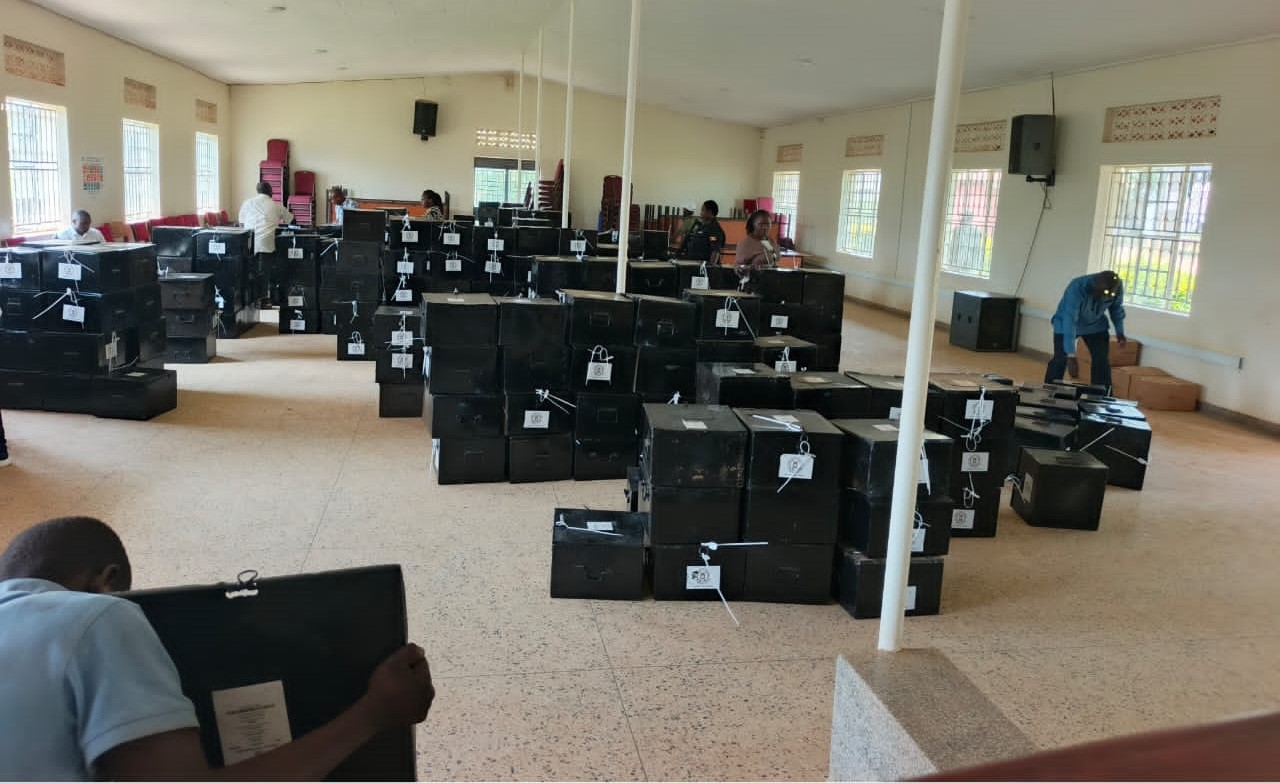
The debate surrounding universal suffrage and selective voting has been a contentious one, with proponents on both sides presenting compelling arguments. Universal suffrage is a system where every citizen has the right to vote, regardless of their education, income, or social status. Countries like Uganda and the United States are examples of nations that have adopted universal suffrage.

According to Robert Dahl, a renowned political scientist, “the idea of democracy implies that all members of the demos are entitled to participate in making decisions about the laws and policies that are binding on the association” (Dahl, 1998). However, it’s worth noting that even in countries like the United States, which prides itself on its democratic system, the final decision-making power often rests with a select few. For instance, the Electoral College system and the role of the Senate in confirming key appointments are examples of selective decision-making in action.
On the other hand, selective voting proposes that only informed and educated citizens should participate in the decision-making process. China, with its merit-based selection process, is often cited as an example of a country that uses a form of selective voting. China’s economic success and rapid development are undeniable, and it’s worth exploring whether Uganda can learn from its approach. According to Francis Fukuyama, “a well-functioning democracy requires not just elections, but also strong institutions and a high level of social capital” (Fukuyama, 2014).

A hybrid system that balances representation with informed decision-making could be the way forward for Uganda. By combining the strengths of both universal suffrage and selective voting, Uganda can create a more effective and representative democracy. This approach would allow for citizen participation while ensuring that decision-makers possess the necessary knowledge and skills to make informed decisions.
In fact, a hybrid system would not be a radical departure from existing practices. As seen in the United States, even supposedly democratic systems often rely on selective decision-making mechanisms. By embracing a more nuanced approach to democracy, Uganda can create a governance system that truly serves the needs of its citizens.
If a full-fledged hybrid system is not feasible, Uganda could still learn from the China model and adapt it to its own unique context. The key is to find a balance between representation and informed decision-making. As Arend Lijphart notes, “consociational democracy” can provide a framework for balancing competing interests and ensuring representation for diverse groups (Lijphart, 1977).
In conclusion, Uganda’s governance system can benefit from a more balanced approach that combines the strengths of universal suffrage and selective voting. By exploring hybrid models and learning from other countries, Uganda can create a more effective and representative democracy.
References:
Dahl, R. A. (1998). On democracy. Yale University Press.
Fukuyama, F. (2014). Political order and political decay: From the industrial revolution to the globalization of democracy. Farrar, Straus and Giroux.
Lijphart, A. (1977). Democracy in plural societies: A comparative exploration. Yale University Press.
Opinions of Prof Nazarious Kyengoro Rukanyangira, a Ugandan scholar.