
In the breathless 24-hour news cycle, strategic statecraft rarely makes headlines. While political noise mostly dominates the agenda, a quiet financial masterstroke has been unfolding on the Nairobi Securities Exchange that deserves the attention of every Ugandan taxpayer.
The Government of Uganda’s acquisition of a 20.15% stake in the Kenya Pipeline Company which was negotiated and approved by Cabinet in February 2026, with the transaction closing during the company’s initial public offering that same month is not just a diplomatic win; it is a highly intelligent, deeply technical, and massively profitable economic play.

Let us look at the numbers. When the Uganda National Oil Company acquired this stake, it paid an initial strategic investment of $255 million. At the time of the pre-listing arrangement just eight months ago, Kenya Pipeline Company shares were valued at KES 9.00, fast forward to October 30, 2026: the stock closed at KES 15.00.
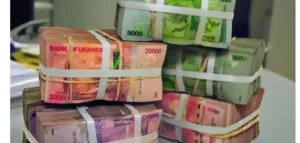
This is not a marginal gain; it is a staggering markup. Uganda’s holding, originally valued at KES 33.8 billion in April 2026, is now estimated at KES 54.9 billion. In dollar terms, that $255 million initial investment is now worth approximately $425 million.
To put this into perspective for the ordinary citizen: Uganda just generated a paper profit of roughly $170 million in under a year. If you bought a plot of land for 255 million shillings and the market price surged to 425 million shillings within eight months, you would be considered a brilliant investor. Uganda just did this at a sovereign, multinational level.
However, focusing solely on the capital gains misses the forest for the trees, the financial return is merely the cherry on top and the real victory lies in the shareholder agreements.
Uganda secured two board seats, filled by the Permanent Secretaries of Finance and Energy, hardwiring its fiscal and energy interests into the company’s governance .
But the true technical triumph is the veto power. Uganda secured veto rights over the hiring and firing of the chief executive, and critically, over tariff matters and dividend policy.
For the everyday Ugandan, “tariff veto power” sounds like bureaucratic jargon. Here is what it actually means: Uganda has a direct say in the cost of transporting fuel through the pipeline.
Fuel dictates the cost of transport, food, and manufacturing, by holding a veto over tariffs, Uganda protects its consumers from arbitrary price hikes. It is a shield against inflation.
Furthermore, the revenue projections solidify this as a long-term winner. For the financial year ending June 2026, Kenya Pipeline Company reported a net profit of KES 11.6 billion, a 13% rise, and recommended a dividend payout of KES 5.9 billion—equivalent to KES 0.32 per share . For Uganda’s 20.15% stake, that translates into a direct cash dividend of approximately KES 1.19 billion (over $9 million) annually, subject to approval.
This is recurring, hard cash flowing into Uganda’s coffers, on top of the asset appreciation and looking further ahead, the company is eyeing a regional trading hub in Kipevu designed to boost revenue to KES 68 billion by 2030 .
As KPC grows, so does Uganda’s dividend cheque and the underlying value of its stake.
Economically, politically, and strategically, this was one of the smartest moves by the Government of Uganda since independence. It has diversified sovereign assets, yielded a massive short-term valuation markup, secured long-term control over the energy supply chain, and now promises a steady stream of dividend revenue. Critics often rightly scrutinize government expenditure, and transparency must remain paramount.
But in this specific instance, the numbers speak for themselves. The Government identified a high-yield, strategic asset in a neighboring market, negotiated hard for governance controls, and has watched its investment grow by $170 million in a matter of months. It is a rare, textbook example of state capitalism done right—a quiet masterstroke securing a cheaper, more energy-secure, and fiscally stronger future for all Ugandans.
Morrison Rwakakamba,
Heartland Farm,
Ikuniro, Rujumbura.